Monday, 24 July 2023

AI as a Service: Empowering Businesses with Smart Solutions

 In the rapidly evolving landscape of technology, artificial intelligence (AI) has emerged as a transformative force, revolutionizing industries across the globe. As businesses strive to stay competitive and meet ever-changing consumer demands, the adoption of AI technologies has become crucial. However, integrating AI into existing systems can be complex and resource-intensive. Enter AI as a Service (AIaaS), a game-changing model that democratizes AI access and empowers organizations of all sizes with smart solutions. In this article, we will explore the concept of AIaaS, its benefits, and its impact on various industries.


What is AI as a Service?

AI as a Service refers to the delivery of AI capabilities through cloud-based platforms. Instead of companies investing heavily in building and maintaining AI infrastructure, AIaaS providers offer access to powerful AI tools and algorithms via the Internet. This on-demand model allows businesses to leverage AI without significant upfront costs, making it more accessible to startups, small and medium-sized enterprises (SMEs), and even larger corporations.


Benefits of AI as a Service

1. Cost-Effective: Traditional AI implementation involves substantial expenses in terms of hardware, software, and skilled personnel. AIaaS eliminates these upfront costs, enabling businesses to pay only for the resources they consume, making it a more cost-effective option.

2. Scalability: As businesses grow, their AI requirements may also change. AIaaS platforms offer scalability, allowing companies to easily adjust their AI resources to accommodate fluctuations in demand.

3. Faster Deployment: Implementing AI in-house can be time-consuming, requiring extensive development and testing. With AIaaS, businesses can access pre-built AI models and services, significantly reducing deployment time.

4. Accessibility: AIaaS breaks down barriers to entry for organizations that lack the expertise or infrastructure to develop AI solutions internally. It empowers companies in various sectors, regardless of their size, to benefit from AI-driven insights and automation.

5. Updates and Maintenance: AIaaS providers handle updates, maintenance, and security, freeing businesses from the burden of managing complex AI systems. This ensures that companies always have access to the latest advancements in AI technology.


Applications of AI as a Service

1. Natural Language Processing (NLP): NLP services offered through AIaaS platforms enable businesses to analyze text data, perform sentiment analysis, and build chatbots for enhanced customer support.

2. Image and Video Analysis: AIaaS solutions provide image and video recognition capabilities, empowering businesses with object detection, facial recognition, and content moderation.

3. Predictive Analytics: Companies can leverage AIaaS for predictive modeling, forecasting, and data-driven decision-making, gaining a competitive edge in their respective industries.

4. Personalization: AI-powered recommendation engines, available through AIaaS, enhance customer experiences by delivering personalized products or content suggestions.

5. Robotic Process Automation (RPA): AIaaS can be integrated with RPA to automate repetitive tasks, streamlining workflows and increasing efficiency.


Impact on Industries

1. Healthcare: AIaaS is revolutionizing the healthcare sector by enabling accurate diagnostics, drug discovery, and personalized treatment plans, ultimately improving patient outcomes.

2. Finance: In the financial industry, AIaaS is pivotal in fraud detection, risk assessment, and algorithmic trading, optimizing processes and minimizing risks.

3. Retail: AI-powered recommendation engines and demand forecasting tools have transformed the retail landscape, providing customers with personalized shopping experiences and helping businesses optimize their inventory management.

4. Manufacturing: AIaaS is driving the adoption of predictive maintenance and process optimization in manufacturing, reducing downtime and improving productivity.


Conclusion

AI as a Service has emerged as a game-changer, democratizing AI access and empowering businesses with cutting-edge solutions. By offering cost-effective and scalable AI capabilities, AIaaS is driving innovation across various industries, from healthcare to finance and retail. As technology continues to advance, the impact of AIaaS is expected to grow, revolutionizing the way businesses operate and delivering enhanced value to customers worldwide. Embracing AIaaS will be a key differentiator for organizations seeking to thrive in the ever-evolving digital age.

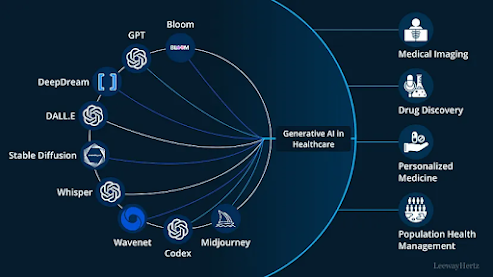
Generative AI Use Cases in Healthcare

The field of healthcare has experienced a significant transformation with the advent of advanced technologies like Generative Artificial Intelligence (AI). Generative AI utilizes machine learning algorithms to create new data, images, and text based on patterns and existing information. In healthcare, this cutting-edge technology has proven to be a game-changer, revolutionizing various aspects of medical practice and research. In this article, we will explore ten compelling use cases of Generative AI in healthcare, highlighting its potential to enhance patient care, diagnosis, treatment, and medical advancements.

1. Medical Imaging Enhancement

Generative AI algorithms are employed to enhance the quality of medical images, making them clearer and more accurate. This technology can reduce image noise, enhance contrast, and reconstruct missing or degraded portions, aiding radiologists and other healthcare professionals in making more precise diagnoses.


2. Synthetic Data Generation

Training machine learning models often requires large datasets, but acquiring such datasets with sensitive medical information can be challenging due to privacy concerns. Generative AI allows the generation of synthetic medical data that retains the statistical characteristics of real data, enabling researchers to develop and validate models without compromising patient privacy.


3. Drug Discovery

The drug discovery process is time-consuming and costly. Generative AI can significantly speed up this process by predicting molecular structures that could be potential candidates for new drugs. It simulates chemical reactions and interactions, suggesting novel compounds for further testing and development.


4. Personalized Treatment Plans

Generative AI can analyze a patient's medical history, genetic makeup, and other relevant factors to generate personalized treatment plans. These plans take into account individual variations, improving the efficacy of treatment and reducing adverse effects.


5. Medical Text Generation

Generating accurate and comprehensive medical reports can be a time-consuming task for healthcare providers. Generative AI can assist in automatically generating medical notes, summaries, and patient reports, enabling doctors to spend more time on direct patient care.


6. Disease Progression Prediction

By analyzing patient data over time, Generative AI can predict disease progression and potential complications. This early warning system allows healthcare professionals to intervene proactively, leading to better patient outcomes and reduced hospitalization rates.


7. Surgical Simulation and Training

Generative AI is used to create realistic surgical simulations, providing medical students and surgeons with a safe environment to practice complex procedures. This technology helps improve surgical skills and fosters innovative techniques, ultimately enhancing patient safety during real operations.


8. Mental Health Diagnosis and Treatment

Generative AI can be employed to analyze patient data, including speech patterns and behavior, to assist in diagnosing mental health conditions. Moreover, it can generate personalized therapy interventions and support tools to aid in the treatment of various mental health disorders.


9. Prosthetics and Assistive Devices

Generative AI plays a crucial role in designing and customizing prosthetics and assistive devices to better suit individual patients. By analyzing biomechanical data and patient preferences, these devices can be optimized for comfort, functionality, and aesthetics.


10. Radiology Report Generation

Interpreting complex radiological images and generating comprehensive reports is demanding for radiologists. Generative AI can automatically analyze medical images and produce structured and standardized radiology reports, facilitating more efficient communication among healthcare teams.


Conclusion

Generative AI has opened up a world of possibilities in healthcare, revolutionizing medical practice, research, and patient care. From improving medical imaging and drug discovery to enhancing surgical training and mental health treatment, the impact of this technology is profound and promising. As Generative AI continues to evolve, it will undoubtedly play an increasingly critical role in shaping the future of healthcare, leading to better diagnoses, more effective treatments, and improved patient outcomes. Nonetheless, it is essential to ensure ethical considerations, data privacy, and regulatory compliance while harnessing the full potential of Generative AI in healthcare domain.

Monday, 17 July 2023

Exploring Different Types of Foundation Models

Artificial Intelligence (AI) has witnessed tremendous growth in recent years, with advancements in machine learning and deep learning algorithms. Foundation models serve as the building blocks for various AI applications, providing the necessary knowledge and framework to solve complex problems. In this article, we will delve into the different types of foundation models in AI development services and explore how they work.


1. Feedforward Neural Networks:

- Feedforward neural networks are the most basic type of foundation model in AI.

- They consist of interconnected layers of artificial neurons, with information flowing in one direction, from input to output.

- These models are primarily used for pattern recognition, classification, and regression tasks.

- The learning process involves adjusting the weights and biases of the neurons to minimize the difference between predicted and actual outputs.


2. Convolutional Neural Networks (CNNs):

- CNNs are widely employed in computer vision tasks, such as image and video recognition.

- They consist of convolutional layers that extract features from input data, followed by fully connected layers for classification.

- CNNs leverage filters to detect patterns and spatial relationships within images.

- The training process involves adjusting the filter weights to minimize the difference between predicted and expected output.


3. Recurrent Neural Networks (RNNs):

- RNNs are designed to handle sequential data, making them suitable for tasks involving time series analysis, natural language processing, and speech recognition.

- These models possess a feedback mechanism that enables information to flow in cycles.

- RNNs retain the memory of previous inputs, allowing them to capture dependencies and contextual information.

- The training process involves backpropagation through time to adjust the weights and biases, optimizing the model for sequential data.


4. Generative Adversarial Networks (GANs):

- GANs are unique foundation models that consist of two neural networks: a generator and a discriminator.

- The generator network generates synthetic data samples, while the discriminator network learns to distinguish between real and fake samples.

- GANs are widely used in tasks such as image synthesis, style transfer, and data augmentation.

- The training process involves a competitive game between the generator and discriminator, with both networks improving their performance iteratively.


5. Transformer Models:

- Transformer models have revolutionized the field of natural language processing (NLP).

- They leverage self-attention mechanisms to capture relationships between different words in a sentence or document.

- Transformer models, such as the famous BERT (Bidirectional Encoder Representations from Transformers), have achieved state-of-the-art results in tasks like text classification, named entity recognition, and language translation.

- The training process involves unsupervised pre-training followed by fine-tuning on specific tasks.


Conclusion:

Foundation models serve as the backbone of AI development services, enabling the creation of sophisticated and intelligent systems. From feedforward neural networks to transformer models, each type offers unique capabilities to tackle diverse challenges. As AI continues to advance, it is crucial to understand the strengths and limitations of different foundation models to harness their full potential in solving complex problems. By leveraging these models effectively, AI development services can unlock new possibilities and drive innovation across various industries.

Monday, 10 July 2023

How to Build AI-Powered Chatbots: A Step-by-Step Guide

Chatbots have become an integral part of businesses, providing efficient customer service and automating repetitive tasks. The advancement of artificial intelligence (AI) has enabled the development of intelligent chatbots that can understand natural language and provide personalized responses. If you're interested in building AI-powered chatbots, here is a step-by-step guide to help you get started:


1. Define the Purpose and Goals:

   - Determine the specific purpose of your chatbot. Do you want it to provide customer support, automate sales processes, or assist with information retrieval?

   - Set clear goals for your chatbot, such as reducing response time, improving customer satisfaction, or increasing sales conversion rates.


2. Choose the Right Platform:

   - Select a suitable platform for building your chatbot. There are numerous options available, including open-source frameworks like Dialogflow, Microsoft Bot Framework, and IBM Watson, as well as chatbot development platforms like Chatfuel and ManyChat.


3. Design Conversational Flows:

   - Map out the conversational flow of your chatbot. Identify the key user inputs and define the corresponding bot responses.

   - Use flowcharts or visual design tools to create a clear and logical conversation structure.


4. Train the Chatbot:

   - Prepare a training dataset to teach your chatbot how to understand and respond to user queries.

   - Use machine learning techniques to train the chatbot model. This involves providing labeled examples of user queries and their corresponding correct responses.


5. Implement Natural Language Processing (NLP):

   - Integrate NLP capabilities into your chatbot to enable it to understand and interpret user inputs.

   - Utilize pre-trained NLP models or build your own using libraries like Natural Language Toolkit (NLTK) or spaCy.


6. Develop Contextual Understanding:

   - Enable your chatbot to maintain context during conversations. This involves tracking user history and previous interactions.

   - Implement techniques like session management and context variables to enhance the chatbot's contextual understanding.


7. Incorporate Machine Learning and AI:

   - Leverage machine learning algorithms and AI techniques to continuously improve your chatbot's performance.

   - Implement feedback loops to collect user feedback and use it to enhance the chatbot's responses over time.


8. Test and Refine:

   - Thoroughly test your chatbot to ensure it provides accurate and relevant responses.

   - Conduct user testing and collect feedback to identify areas for improvement.

   - Refine the chatbot's conversational flow, NLP models, and AI algorithms based on the testing results.


9. Deploy and Monitor:

   - Deploy your chatbot on the desired platforms, such as your website, messaging apps, or social media channels.

   - Monitor the chatbot's performance regularly and analyze user interactions to identify any issues or areas of improvement.


10. Provide Ongoing Maintenance and Updates:

    - Regularly update and maintain your chatbot to ensure it remains effective and up-to-date.

    - Incorporate new features, address user feedback, and fix any bugs or issues that may arise.


In conclusion, building an AI-powered chatbot requires careful planning, design, and implementation. By following these steps, you can create a chatbot that offers intelligent and personalized interactions with users. Whether you are a small business owner or a large enterprise, partnering with an AI chatbot development company can provide you with the expertise and resources needed to build a successful chatbot tailored to your specific needs. An experienced AI chatbot development company can guide you through the entire process, from conceptualization to deployment, ensuring that your chatbot delivers exceptional user experiences and drives business growth.

Friday, 7 July 2023

How to Build an MLOps Pipeline

In today's data-driven world, organizations are leveraging machine learning (ML) models to gain valuable insights and make informed decisions. However, building and deploying ML models efficiently can be a complex and challenging task. This is where MLOps (Machine Learning Operations) comes into play. MLOps refers to the practices and tools used to streamline the development, deployment, and management of ML models in production environments. In this article, we will explore the key steps involved in building an MLOps pipeline.


1. Define the problem and gather data:

Before diving into building an MLOps pipeline, it's crucial to clearly define the problem you want to solve with ML. Understand the business objectives, identify the relevant data sources, and gather the required data. This data will be the foundation for training and evaluating your ML models.


2. Preprocess and clean the data:

Data preprocessing is a critical step in any ML project. It involves cleaning the data, handling missing values, transforming variables, and normalizing the data to make it suitable for training ML models. This step ensures that the data is consistent, accurate, and ready for analysis.


3. Feature engineering:

Feature engineering involves selecting and creating relevant features from the available data. It helps improve the performance of ML models by providing them with meaningful information. Domain expertise plays a vital role in this step, as it requires a deep understanding of the problem and the data.


4. Model training and evaluation:

Once the data is prepared and features are engineered, the next step is to train and evaluate ML models. Choose an appropriate algorithm or framework based on your problem and data characteristics. Split the data into training and testing sets to assess the model's performance. Use evaluation metrics such as accuracy, precision, recall, or F1 score to measure the model's effectiveness.


5. Deploy the model:

After selecting a well-performing ML model, it's time to deploy it in a production environment. This step involves packaging the model, its dependencies, and any required preprocessing steps into a deployable unit. Depending on your infrastructure, you can deploy the model on cloud platforms, edge devices, or on-premises servers.


6. Continuous integration and deployment:

To ensure smooth and efficient model deployment, implement a continuous integration and deployment (CI/CD) process. This process involves automating the building, testing, and deployment of ML models. It enables quick iterations, reduces human error, and provides reproducibility. CI/CD tools such as Jenkins, GitLab, or Travis CI can be used to implement this workflow.


7. Monitoring and feedback loop:

Once the ML model is deployed, it's essential to monitor its performance in real-time. Implement monitoring mechanisms to track key performance indicators (KPIs) and detect anomalies. This enables timely identification of model degradation or data drift, triggering retraining or model updates. Additionally, gather user feedback to continuously improve the model and address any issues.


8. Model versioning and management:

Maintaining different versions of ML models is crucial for reproducibility, model comparison, and rollback purposes. Implement a versioning system to manage different model versions, associated code, and data. This ensures proper documentation and facilitates collaboration among data scientists and engineers.


9. Security and governance:

ML models often handle sensitive data, and their predictions impact critical business decisions. Therefore, security and governance measures must be in place to protect the models and ensure compliance with regulations. Implement access controls, encryption, and auditing mechanisms to secure the ML pipeline and its components.


10. Retraining and model updates:

ML models need to adapt to changing data distributions and business requirements. Set up a retraining schedule to periodically update models with new data. This can be done using techniques such as online learning, transfer learning, or active learning. Monitor the model's performance after updates to ensure it maintains its effectiveness.


Building an MLOps pipeline requires a holistic approach that combines data engineering, ML model development, software engineering, and DevOps practices. By following these steps, organizations can establish a robust pipeline that enables efficient development, deployment, and management of ML models. Embracing MLOps principles empowers organizations to leverage the full potential of their ML investments and drive business value through data-driven decision-making.

Generative AI Models for Image Synthesis: Unlocking the Power of Generative Image Models

In recent years, generative AI models have revolutionized the field of image synthesis, enabling the creation of stunning and realistic images that were once only possible through human creativity and expertise. These models, known as generative image models, have opened up new possibilities in various domains, including art, design, entertainment, and even scientific research. In this article, we will explore the concept of generative image models and delve into their applications, advancements, and future potential.


1. Introduction to Generative Image Models:

   - Generative image models are deep learning models designed to generate new images from scratch.

   - They learn from a dataset of existing images to capture their underlying patterns, structures, and features.

   - These models employ generative adversarial networks (GANs), variational autoencoders (VAEs), or other similar architectures.


2. Generative Adversarial Networks (GANs):

   - GANs consist of two main components: a generator network and a discriminator network.

   - The generator generates new images, while the discriminator tries to distinguish between real and generated images.

   - Through an adversarial training process, the generator becomes adept at producing increasingly realistic images.


3. Variational Autoencoders (VAEs):

   - VAEs are another popular class of generative image models.

   - They learn a compact representation of the input images, called a latent space, which can be used to generate new images.

   - VAEs enable image synthesis by sampling from the learned latent space and decoding the samples into images.


4. Applications of Generative Image Models:

   - Art and Design: Generative image models have been used to create stunning pieces of art and innovative designs.

   - Entertainment: They play a vital role in computer graphics, special effects, and game development, enabling the generation of lifelike characters and environments.

   - Data Augmentation: Generative image models can generate synthetic images to augment training datasets, enhancing the performance of computer vision models.

   - Anonymization: These models can generate privacy-preserving images by synthesizing new images that resemble the original but do not disclose sensitive information.

   - Scientific Research: Generative image models have facilitated scientific research by generating realistic simulations and aiding data analysis.


5. Advancements in Generative Image Models:

   - High-Resolution Synthesis: Recent advancements have enabled generative image models to generate high-resolution images with intricate details.

   - Style Transfer: Generative models can transfer the style of one image to another, enabling artistic transformations and creative expressions.

   - Text-to-Image Synthesis: Some models can generate images based on textual descriptions, bridging the gap between language and visual content.

   - Interactive Image Synthesis: Researchers are exploring methods to allow users to interact with generative models, enabling real-time image editing and customization.


6. Challenges and Ethical Considerations:

   - Bias and Fairness: Generative image models can inadvertently perpetuate biases present in the training data, requiring careful evaluation and mitigation strategies.

   - Intellectual Property: Issues related to ownership and copyright arise when generative models create images that resemble existing artworks or copyrighted material.

   - Misuse and Deepfakes: There are concerns regarding the malicious use of generative image models to create deceptive deepfake images or videos.


7. Future Directions:

   - Improved Realism: Researchers are continuously working to enhance the realism of generative image models, making them even more indistinguishable from real images.

   - Cross-Domain Synthesis: Exploring the generation of images across different domains, such as transforming sketches into realistic images or generating novel textures.

   - Multimodal Synthesis: Advancements are being made to generate images that combine visual and textual information, enabling more expressive and contextual outputs.


Generative image models have unlocked a world of creative possibilities, empowering artists, designers, and researchers alike. As these models continue to evolve, we can expect further breakthroughs in image synthesis and witness their integration into various industries. However, it is crucial to address the ethical considerations and potential challenges associated with their usage. By responsibly harnessing the power of generative image models, we can leverage their immense potential to drive innovation and shape the future of visual content creation.

Exploratory Data Analysis and Its Purposes

Data analytics consulting services play a crucial role in helping businesses extract meaningful insights from their data. One of the fundamental techniques used in this field is exploratory data analysis (EDA). EDA involves examining and visualizing data to better understand its patterns, relationships, and characteristics. It serves as a critical step in the data analytics process, enabling businesses to make informed decisions and uncover valuable insights. In this article, we will explore the concept of exploratory data analysis and its purposes.


1. Introduction to Exploratory Data Analysis:

   a. Exploratory data analysis is an approach to analyzing data sets to summarize their main characteristics and gain insights.

   b. It involves techniques such as data visualization, statistical analysis, and data mining to explore patterns, relationships, and anomalies within the data.

   c. EDA provides a preliminary understanding of the data, helping analysts formulate hypotheses and guide further analysis.


2. Purposes of Exploratory Data Analysis:

   a. Data Cleaning: EDA helps identify missing values, outliers, and inconsistencies in the data. By cleaning and preprocessing the data, analysts can ensure its quality and reliability.

   b. Descriptive Statistics: EDA employs summary statistics and visualizations to describe the main features of the data, including measures of central tendency, dispersion, and distribution.

   c. Data Visualization: EDA utilizes graphs, charts, and plots to visually represent the data. Visualizations make it easier to identify trends, patterns, and outliers, enabling better comprehension of complex data sets.

   d. Feature Selection: EDA aids in selecting the most relevant features or variables for analysis. By understanding the relationships between variables, analysts can focus on the ones that have the most impact on the target variable.

   e. Hypothesis Generation: EDA helps analysts formulate hypotheses about the relationships and patterns observed in the data. These hypotheses can then be tested using more advanced statistical techniques.

   f. Outlier Detection: EDA enables the identification of outliers, which are data points that deviate significantly from the expected patterns. Outliers can provide valuable insights or indicate data quality issues.

   g. Data Transformation: EDA helps transform the data by applying mathematical or statistical operations. This transformation can enhance the data's suitability for specific analyses or models.

   h. Correlation and Association: EDA explores correlations and associations between variables, uncovering potential cause-and-effect relationships. This information is vital for predictive modeling and decision-making.

   i. Data Reduction: EDA assists in reducing the dimensionality of data sets by identifying redundant or irrelevant variables. Dimensionality reduction enhances computational efficiency and simplifies analysis.

   j. Preliminary Insights: EDA provides initial insights into the data, facilitating the generation of research questions and guiding further data exploration.


3. Benefits of Exploratory Data Analysis:

   a. Improved Data Quality: EDA helps identify and address data quality issues, resulting in more accurate and reliable analyses.

   b. Enhanced Decision-Making: EDA uncovers patterns, trends, and relationships that aid in making informed business decisions.

   c. Early Detection of Anomalies: EDA allows the early detection of anomalies or outliers, which can be critical for identifying potential risks or opportunities.

   d. Efficient Resource Allocation: EDA helps businesses allocate resources more efficiently by identifying areas of improvement or potential cost savings.

   e. Better Predictive Models: EDA provides insights into the relationships between variables, enabling the development of more accurate predictive models.

   f. Improved Communication: EDA's visualizations make it easier to communicate complex data insights to stakeholders, facilitating better understanding and collaboration.


In conclusion, exploratory data analysis is a powerful technique employed by data analytics consulting services to gain initial insights into data sets. By utilizing various statistical and visualization methods, EDA helps identify patterns, relationships, and outliers, while providing a foundation for further analysis. The purposes of exploratory data analysis encompass data cleaning, descriptive statistics, data visualization, hypothesis generation, feature selection, outlier detection, data transformation, correlation and association analysis, data reduction, and the generation of preliminary insights. Embracing EDA can bring numerous benefits to businesses, including improved data quality, enhanced decision-making, early anomaly detection, efficient resource allocation, better predictive models, and improved communication.

Top 10 AI Implementation Companies in USA

In 2026, Artificial Intelligence is no longer just a strategic differentiator—it has transformed into a fundamental operational requirement....