Showing posts with label Benefits of Generative AI in Healthcare. Show all posts

Tuesday, 5 September 2023

Generative AI in Healthcare: Revolutionizing Medicine Through Innovation

In recent years, the healthcare industry has witnessed a transformative wave of technological advancements, and at the forefront of this revolution is Generative AI in Healthcare. This cutting-edge technology is changing the way medical professionals diagnose, treat, and predict diseases, offering unprecedented insights and capabilities. In this article, we will delve into the world of Generative AI in Healthcare and explore its potential to redefine the future of medicine.

Understanding Generative AI in Healthcare

Generative AI, also known as Generative Adversarial Networks (GANs), is a subset of artificial intelligence that focuses on creating, or generating, new content, such as images, text, or even medical data. GANs consist of two neural networks – a generator and a discriminator – which work together in a dynamic process. The generator produces content, while the discriminator evaluates it for authenticity. Through this continuous interaction, GANs can generate highly realistic and contextually relevant data.

In healthcare, Generative AI leverages this capability to synthesize medical images, generate patient data, and even develop drug compounds. The applications of this technology are wide-ranging and hold immense promise for the industry.

Medical Imaging Advancements

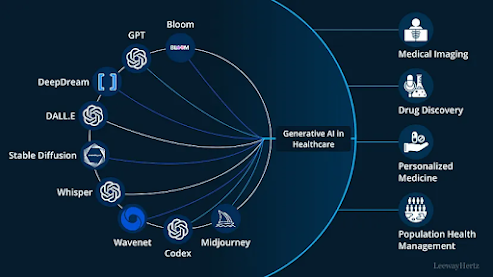
One of the most promising areas of Generative AI in Healthcare is medical imaging. Radiologists and clinicians rely heavily on accurate and detailed images to diagnose and treat patients. Generative AI can enhance the quality of these images, making it easier to identify abnormalities and diseases.

For instance, GANs can be used to enhance low-resolution MRI or CT scans, providing clearer images and reducing the need for repetitive scans. This not only saves time and resources but also improves patient comfort and safety.

Moreover, Generative AI can generate synthetic medical images for training purposes. It can create thousands of realistic images representing various medical conditions, aiding in the training of machine learning models to recognize these conditions with greater accuracy.

Drug Discovery and Development

The pharmaceutical industry is another beneficiary of Generative AI's capabilities. Developing new drugs is a time-consuming and expensive process, often taking years and billions of dollars. Generative AI can significantly accelerate drug discovery by predicting molecular structures and simulating the effects of potential drugs.

By analyzing vast datasets of chemical compounds and biological interactions, Generative AI can generate novel drug candidates with specific properties. This expedites the process of identifying potential treatments for diseases, including those that were previously considered incurable.

Personalized Medicine

Generative AI in Healthcare also contributes to the advancement of personalized medicine. Every patient is unique, and their response to treatments can vary greatly. Generative AI can analyze a patient's genetic and clinical data to generate personalized treatment plans. This ensures that medical interventions are tailored to an individual's specific needs, increasing the chances of successful outcomes and minimizing side effects.

Challenges and Ethical Considerations

While Generative AI in Healthcare offers immense potential, it also raises important challenges and ethical considerations. Data privacy, security, and bias are significant concerns. The use of patient data to train AI models must be done with utmost care to protect individuals' privacy and ensure that biases do not result in discriminatory outcomes.

Moreover, there is a need for robust regulatory frameworks to govern the use of Generative AI in Healthcare. Ensuring that these technologies are used safely and ethically is crucial to building trust among patients, healthcare professionals, and regulators.

The Road Ahead

Generative AI in Healthcare is a game-changer for the medical industry. It promises to improve the accuracy and efficiency of diagnoses, accelerate drug discovery, and enable personalized medicine on a scale never seen before. However, it is essential to approach its development and deployment with caution, prioritizing ethical considerations and patient privacy.

As this technology continues to evolve, collaboration between AI experts, healthcare professionals, and policymakers will be vital. Together, they can shape a future where Generative AI in Healthcare not only enhances the capabilities of medical professionals but also improves patient outcomes and saves lives.

In conclusion, Generative AI in Healthcare represents a remarkable leap forward in the field of medicine. Its ability to generate data, improve imaging, accelerate drug discovery, and enable personalized treatment plans holds the promise of transforming healthcare as we know it. With responsible development and thoughtful regulation, Generative AI has the potential to revolutionize medicine and bring about a new era of precision healthcare.

Monday, 24 July 2023

Generative AI Use Cases in Healthcare

The field of healthcare has experienced a significant transformation with the advent of advanced technologies like Generative Artificial Intelligence (AI). Generative AI utilizes machine learning algorithms to create new data, images, and text based on patterns and existing information. In healthcare, this cutting-edge technology has proven to be a game-changer, revolutionizing various aspects of medical practice and research. In this article, we will explore ten compelling use cases of Generative AI in healthcare, highlighting its potential to enhance patient care, diagnosis, treatment, and medical advancements.

1. Medical Imaging Enhancement

Generative AI algorithms are employed to enhance the quality of medical images, making them clearer and more accurate. This technology can reduce image noise, enhance contrast, and reconstruct missing or degraded portions, aiding radiologists and other healthcare professionals in making more precise diagnoses.


2. Synthetic Data Generation

Training machine learning models often requires large datasets, but acquiring such datasets with sensitive medical information can be challenging due to privacy concerns. Generative AI allows the generation of synthetic medical data that retains the statistical characteristics of real data, enabling researchers to develop and validate models without compromising patient privacy.


3. Drug Discovery

The drug discovery process is time-consuming and costly. Generative AI can significantly speed up this process by predicting molecular structures that could be potential candidates for new drugs. It simulates chemical reactions and interactions, suggesting novel compounds for further testing and development.


4. Personalized Treatment Plans

Generative AI can analyze a patient's medical history, genetic makeup, and other relevant factors to generate personalized treatment plans. These plans take into account individual variations, improving the efficacy of treatment and reducing adverse effects.


5. Medical Text Generation

Generating accurate and comprehensive medical reports can be a time-consuming task for healthcare providers. Generative AI can assist in automatically generating medical notes, summaries, and patient reports, enabling doctors to spend more time on direct patient care.


6. Disease Progression Prediction

By analyzing patient data over time, Generative AI can predict disease progression and potential complications. This early warning system allows healthcare professionals to intervene proactively, leading to better patient outcomes and reduced hospitalization rates.


7. Surgical Simulation and Training

Generative AI is used to create realistic surgical simulations, providing medical students and surgeons with a safe environment to practice complex procedures. This technology helps improve surgical skills and fosters innovative techniques, ultimately enhancing patient safety during real operations.


8. Mental Health Diagnosis and Treatment

Generative AI can be employed to analyze patient data, including speech patterns and behavior, to assist in diagnosing mental health conditions. Moreover, it can generate personalized therapy interventions and support tools to aid in the treatment of various mental health disorders.


9. Prosthetics and Assistive Devices

Generative AI plays a crucial role in designing and customizing prosthetics and assistive devices to better suit individual patients. By analyzing biomechanical data and patient preferences, these devices can be optimized for comfort, functionality, and aesthetics.


10. Radiology Report Generation

Interpreting complex radiological images and generating comprehensive reports is demanding for radiologists. Generative AI can automatically analyze medical images and produce structured and standardized radiology reports, facilitating more efficient communication among healthcare teams.


Conclusion

Generative AI has opened up a world of possibilities in healthcare, revolutionizing medical practice, research, and patient care. From improving medical imaging and drug discovery to enhancing surgical training and mental health treatment, the impact of this technology is profound and promising. As Generative AI continues to evolve, it will undoubtedly play an increasingly critical role in shaping the future of healthcare, leading to better diagnoses, more effective treatments, and improved patient outcomes. Nonetheless, it is essential to ensure ethical considerations, data privacy, and regulatory compliance while harnessing the full potential of Generative AI in healthcare domain.

Top 10 AI Implementation Companies in USA

In 2026, Artificial Intelligence is no longer just a strategic differentiator—it has transformed into a fundamental operational requirement....